
Gold School
Why does gold sometimes go the wrong way after news?
The short answer
These are the usual (textbook) reactions. Gold does not always follow them. Updated 3 October 2026.
Reason 1: it was already expected
Markets move on surprises. If traders already expected weak data, much of the move may have happened before the release. When the news finally lands, there is little left to react to, and gold can even move the other way.
Reason 2: something bigger happened
Gold reacts to everything at once. A soft US number at 13:30 can be swamped by a Fed speech at 15:00, a jump in oil, or a move in bond yields. The verdict explains one piece of news, not the whole day.
Reason 3: big buyers and sellers
Central banks, large funds and gold ETFs can buy or sell in size for their own reasons. Their flows can outweigh a single data release.
Reason 4: the first move fades
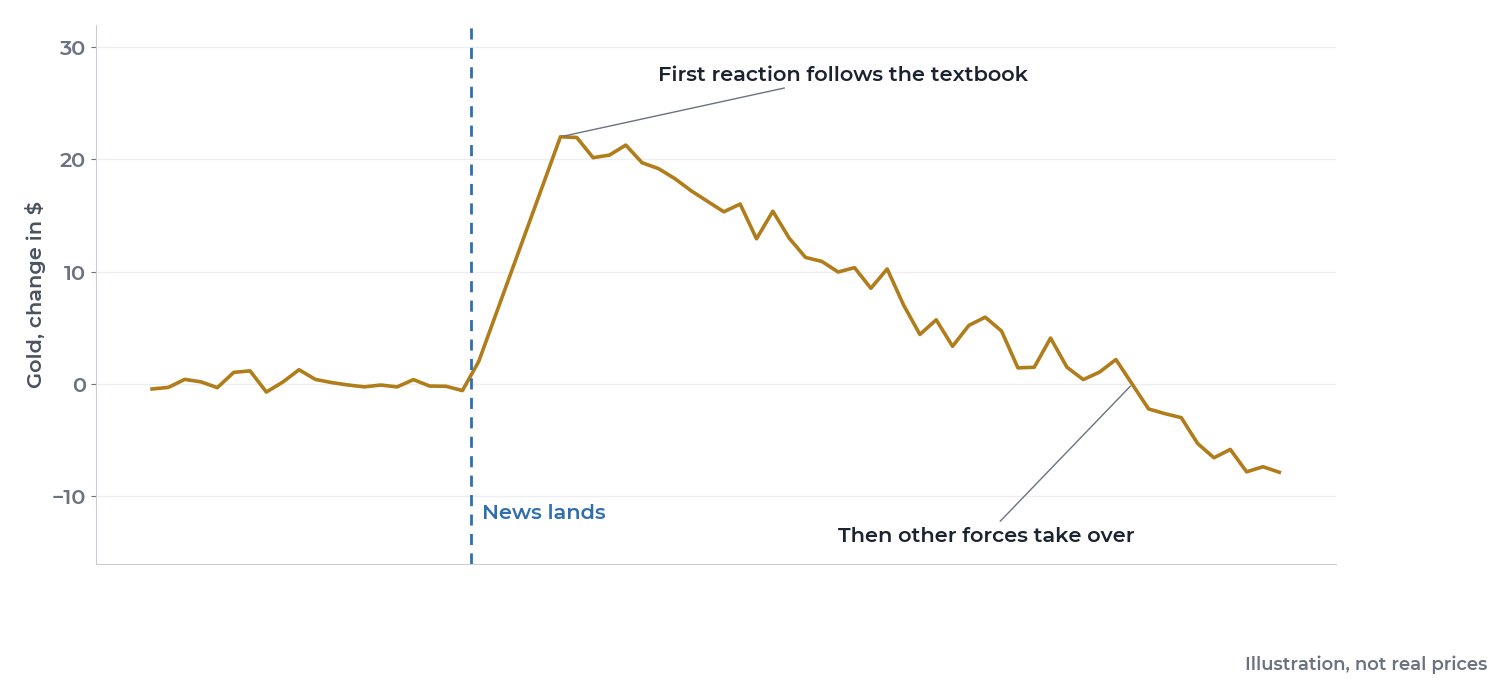
On 2 October 2026, gold rose sharply after a weak US jobs report, as the textbook says. By the evening it had given that back and closed lower, as US bond yields rose. Both things were true: the first reaction followed the textbook, and the rest of the day did not.
So why use the textbook at all?
Because it tells you what the news means. Knowing the usual reaction makes the unusual ones easier to understand. That is what Why Gold Moved is for: understanding, not prediction.
Get the verdict when the news lands
Big gold news, explained in plain English the moment it happens. Free.